Anúncios
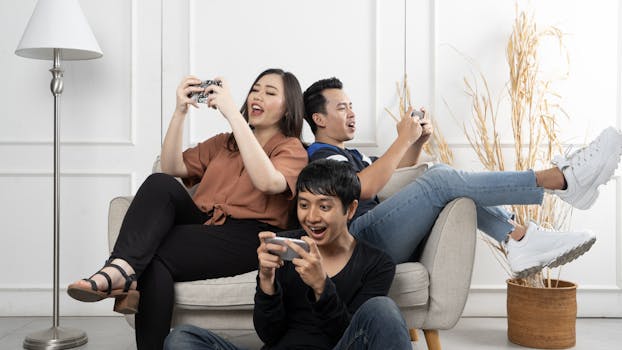
Gaming has quickly become a daily ritual for countless young people. Around the globe, kids and teens gather online, not just to play, but to connect, laugh, and grow. Social dynamics, personal identity, and even language itself shift as this digital playground expands.
What makes the effect so powerful? It’s the unique influence of gamer culture—blending memes, inside jokes, and teamwork strategies that fuel how the new gamer generation sees itself. When players joke with, help, or challenge each other during matches, bonds form just as they would on a school sports field.
Exploring this world reveals far more than flashing controllers and epic wins. You’ll discover real tools for resilience, creativity, and community. Join us to learn actionable lessons from gamer culture that are driving important changes in today’s youth.
Building real belonging through digital rituals and talk
Shared language and rituals create unmistakable belonging for new gamers. Simple catchphrases like “GG” or “noob” reflect unwritten rules only insiders truly understand. Initiation takes practice, observation, and daring to participate.
"You learn to say ‘ready check’ at the right time, or when to hype a win," says Jamie, 16, while streaming with friends. These routines ground the new generation in a sense of unity and mutual respect fostered by gamer culture.
Mutual support: The direct give-and-take of gamer spaces
Each day, teammates share tips like "cover left!" or "watch the flank." Quick problem-solving isn’t just routine—it’s vital. These interactions become the social glue, teaching new members the value of looking out for each other in the heat of gameplay.
When someone stumbles, encouragement flows easily. “Don’t sweat it, you’ve got next round,” someone might write in chat. Respect is shown through honest, constructive feedback, even if it’s playful or wrapped in friendly teasing.
Leaders evolve socially—calling strategy, setting the tone for sportsmanship, and supporting new players’ progress. Gamer culture makes these types of active care standard, creating tight bonds that extend far outside the game world.
Language as a culture-building tool among youth
The slang, acronyms, and references fill Discord and game chats daily. For example, terms like “OP” (overpowered) or “nerf” transform complex feedback into clear, shared meaning. These words travel fast—crossing real-life school hallways and group texts.
Embracing this lingo, teens shape identity: “Let’s not tilt,” one says after a tough match, using a term for frustration. Friendships solidify with each phrase only insiders deploy correctly. It’s a social bond based on language as much as performance.
This rapid-fire communication speeds up cooperation. Teams finish raids with seconds to spare because everyone talks the same tactical shorthand, cutting confusion and building trust—a hallmark of strong gamer culture.
| Term | Meaning | Real-World Usage | Takeaway |
|---|---|---|---|
| GG | Good Game | Typed after match ends | Initiates sportsmanship and closure |
| Noob | New/inexperienced player | “Don’t worry, I’m a noob too” | Signals acceptance of learning stage |
| Tilt | Loss of composure | “Let’s not tilt right now” | Boosts team morale and focus |
| Carry | Lead team to victory | “Thanks for the carry!” | Credit teamwork and skill |
| Nerf | Weaken a character/item | “That hero needs a nerf” | Enables shared problem-solving talk |
Characters and storytelling shape personal values fast
Games provide players with a unique space to experiment with choices. Strong character arcs and moral dilemmas leave lasting impressions on the new gamer generation, shaping how they make decisions outside of games.
Many say, "I learned to value teamwork, not just high scores, from my guild leader’s example." That character—a wise, strategic player—turns into a digital role model. Gamer culture passes these values onward.
Everyday hero moments: Copying behaviors, not just skills
Players internalize integrity and empathy by mimicking their favorite character’s actions. A player might refuse to abandon a struggling teammate, thinking, "I’d want someone to help me here, too." This creates a cycle of active empathy that carries into classrooms and friend groups.
Analogous to a neighborhood basketball team that shuns ball hogs, online squads embrace “sharing XP” and “calling out loot for others.” As routines deepen, the new gamer generation considers kindness part of being a skilled gamer.
- Help new players learn campaign basics—show, don’t lecture, how missions work so they join future activities confidently.
- Encourage sharing in loot drops—explain why thinking about team improvement matters more than just individual upgrades.
- Include everyone in voice chat—even quiet team members benefit from lighthearted banter and direct invitations to speak up.
- De-escalate flame wars—intervene with humor or peer praise to reset bad moods quickly, so no one feels targeted or alone.
- Praise fair play—cheer for a clever move, not just for wins, to reinforce the idea that sportsmanship should always be visible.
These behaviors have ripple effects, encouraging cooperation across the borders of digital and physical worlds and deepening gamer culture’s reach.
Real-life applications and in-game scenarios
Students who manage guild schedules show up to school committees with a planner in hand. They learn time management in-game and apply it straight to daily life tasks.
A friend reminds teammates to share loot after a big win, then purchases snacks for the group at a weekend hangout. These habits, practiced digitally through gamer culture and reinforced by peer praise, turn into lifelong social skills.
- Organize friend study groups with raid-style assignments—make roles clear and encourage everyone to support one another.
- Trade turn-taking in board games—mirror the fairness learned online to keep real-life play inclusive and fun for all participants.
- Communicate with short, effective phrases—bring confidence from game chat directions (“focus left,” “hold here”) into group projects.
- Resolve group tensions—draw on in-game strategies and discuss missteps openly without assigning personal blame.
- Track shared achievements—display combined results in a team notebook to share credit for everyone’s contributions, as it happens in game stats.
Practical examples like these make the influence of gamer culture visible—and simple to practice outside of gaming environments, too.
Teamwork and leadership get real results through clear actions
Effective teamwork isn’t just for pro gamers. When youth coordinate tasks to complete objectives—like raids—they gain experience with leadership and quick decision-making that translates to other life roles.
Healthy groups run like clockwork. Each gamer knows their responsibility, adjusting their play for the benefit of all. That sense of synergy, fueled by gamer culture, makes trust nearly automatic.
Strategy sessions: Tabletop practice for digital wins
A team prepping for a big match creates priority lists—"heal first, distract second, flank last." They stick to a joint call even if an easier route appears. This discipline strengthens loyalty and faith in each other, producing lasting leadership habits.
Collaboration doesn’t stop at the keyboard. The group assigns a captain, reviews match video, and rotates team leads, encouraging everyone to try new roles. This type of cooperation helps the new gamer generation learn flexibility as a team value.
Friends swap stories about calling shots in chat and making mistakes without blame, normalizing risk-taking for growth. Mistakes become team learning moments—a core value in gamer culture worth replicating elsewhere.
Debrief: Checklist for lasting improvement
Good leaders follow up every group match with simple, actionable reviews. They check off: who did what, how it helped, and where to improve. The format might look like:
“1. Did we follow our plan? 2. How clear was our mid-match talk? 3. Did anyone feel left out?” Then each member answers honestly, embracing the review as a shared tool for getting better.
The checklist gets repeated after every team activity, building a habit that shapes reliable, reflective leadership both in and out of games. Gamer culture prizes this open debrief style.
| Team Activity | Quick-win Action | Common Mistake | Post-action Fix |
|---|---|---|---|
| Raid Boss Fight | Stick to assigned roles | Freelancing during phase change | Re-review role assignments |
| Capture the Flag | Pair up for defense | Everyone chases attacker solo | Designate defense-first team |
| Group Decision | Pause for vote | Rushing majority choice | Set chat timer for input |
| Loot Distribution | Use rotation order | First come, first serve grab | Track in shared doc |
| End-match Review | List key moments | Blame-shifting | One positive for each member |
Profound identity shifts: Experiment, belong, and take pride
Gamer culture helps youth find parts of themselves that might never surface otherwise. It gives permission to try on new personas, experiment publicly, and receive validation for genuine, positive traits.
Avatars and customization tools invite creativity. A player says, “When I choose my look, I can explore styles I wouldn’t wear at school.” Small details build confidence and shape lasting identity.
Experimenting with new roles and styles fosters self-esteem
Players can change avatars for each game, letting shy kids become bold or quiet leaders take center stage in virtual campaigns. They discover talents and preferences, using gamer culture to rehearse strengths first in a lower-stakes environment.
Peers recognize authentic flair—cheering for artistic usernames or clever profile banners. “The squad always notices my new profile,” one player beams after switching to a creative color palette. That praise boosts self-worth.
Repeated affirmation, even for tiny expression choices, translates to greater confidence at school and beyond. The new gamer generation brings that self-belief forward, crediting gamer culture for their empowered growth.
Strengthening identity through shared success rituals
Celebrating milestones—first 100 wins, a favorite skin unlocked—cements bonds and crafts family-like loyalty online. Each marker gets noticed and applauded, building mutual respect that makes everyone feel seen and essential.
These celebration routines—group screenshots, inside jokes in chat, custom victory emotes—create unbreakable group memory. "We always post a GIF when someone hits a prestige level," says Mark, 18. That ritual becomes a badge of pride and belonging.
This habit of visible recognition encourages individuals to own their story in public, bringing validation and confidence into close friendships. Gamer culture values identity not by rank, but by uniqueness and mutual appreciation.
The social ripple: Expanding friendship circles every match
Each connection in a gaming session sets off a chain reaction. As teens meet and befriend new players, social groups stretch beyond local boundaries. Gamer culture rewards those who step out and welcome strangers.
Players participate in cross-regional clans, creating lasting friendships despite distance or background. They swap favorite mod tips, meme formats, or weekend plans, often deepening bonds by inviting newbies into the fold.
Turning strangers into teammates through icebreaker routines
Clans start each session with check-ins: “What’s everyone’s energy level today?” A little humor—“I powered up with ice cream an hour ago”—breaks the ice, opening doors to new friendships. Gamer culture normalizes quick trust-building.
A team might create a playlist everyone adds to or assign pairs for warm-up matches, ensuring no one stands on the sidelines. These practiced routines quickly make outsiders feel like part of the core crew. “You’re in the squad now!” is common and welcome.
By repeating these welcoming patterns, the new gamer generation learns to make space for others. These habits carry over, teaching generous hospitality and empathy in school, work, or other teams.
Using play to maintain long-distance bonds
Kids in different states schedule daily voice chats while completing game quests. “We catch up about real life between rounds,” one teenager shares. This mix of conversation and teamwork keeps friendships alive, even without physical meetups.
Group habits stick: celebrating virtual victories with digital stickers, planning in-game tournaments for birthdays, and collecting shared screenshots. “Last game night, everyone made custom avatars for my birthday,” laughs one player.
The blend of fun and relationship-building transforms the digital environment into a reliable lifeline, expanding support networks that boost mental health and loyalty. Gamer culture’s inclusivity blurs the line between digital and traditional friendship.
Future-ready mindsets: Adapting to rapid change with gamer savvy
The gamer generation adapts to updates, balance changes, and new content with practice. Facing constant novelty, they become resourceful and flexible—skills invaluable outside games, too.
Every patch or redesign acts as a micro-lesson in resilience, pushing players to relearn habits, strategies, and technologies on the fly. Gamer culture helps make discomfort normal and progress part of everyday life.
Applying in-game adaptability to real-life learning
Players quickly scan patch notes, sharing “what’s new” guides with friends. They treat every reset as a fun challenge, making mistakes early to optimize faster. “We just practice in sandbox mode until we’re comfy,” says one squad leader.
Analogous to a student learning new class routines, gamers develop curiosity about every update. Sharing tips daily trains patience and a solution-first mindset, laying a foundation for adjusting confidently to any surprise at work or school.
This learning-by-doing culture becomes second nature. Whether troubleshooting tech issues or picking up new hobbies, the same willingness to iterate, tweak, and retry powers growth beyond games.
Developing digital citizenship and online ethics
Through reporting systems and peer feedback, gamer culture sets boundaries for polite and fair interaction. Players self-police: flagging bullying, muting toxic chat, and praising positive behaviors via custom emotes.
A public apology during a match—like “Sorry, I got heated!”—restores harmony and models accountability. By normalizing these actions, the gamer generation raises standards for digital conduct and respect across wider online communities.
These habits ripple out: using clear boundaries, managing privacy, and discussing consequences of sharing information. Gamer spaces become real-life classrooms for practicing ethical technology use and responsible communication.
Looking ahead: The lasting promise and challenge of gamer culture’s impact
Gamer culture keeps influencing how young people connect, grow, and show up in the world. Its language, habits, and social codes create a rich, supportive network that fosters resilience, empathy, and creativity.
With every voice chat and raid, the new gamer generation learns to lead, collaborate, and adapt quickly, bringing skills from game worlds into classrooms, friend groups, and workplaces. These changes deserve ongoing attention from parents, educators, and leaders.
Next time you hear phrases from gamer culture at the dinner table, recognize them as more than harmless slang. They mark the rise of a culture uniquely equipped for the connected, ever-changing future—and one where belonging, pride, and compassion will always matter.